I Had a Successful Career. So Why Did I Become a Real Estate Agent?
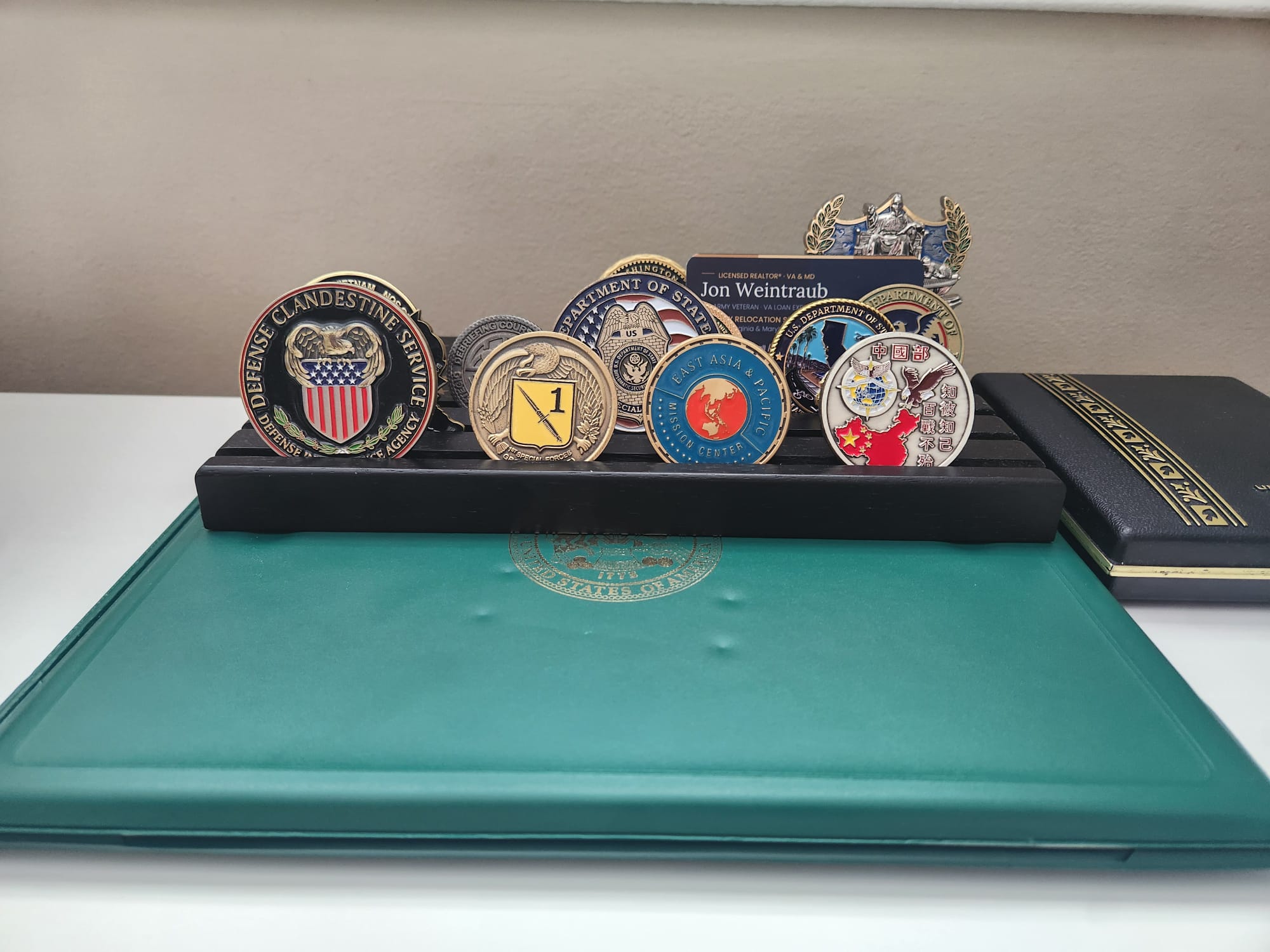
I had a successful career in the defense sector.
For more than a decade, I worked in the defense and intelligence world. My career took me through 30+ countries, government, the intelligence community, and defense contracting, where I supported military and intelligence programs, managed federal contracts, led teams, and eventually moved into operations leadership. It was interesting, challenging work, and I was good at it.
So why did I become an agent?
The answer is a little less dramatic than you might expect.
It Started With My Own Real Estate
I originally got my real estate license for myself. I had already been investing in real estate, and getting licensed gave me a better understanding of the process and more control over my own transactions. At the time, I wasn't planning on building a real estate business, and I certainly wasn't planning on leaving the defense industry where I was working as a program manager.
Then something unexpected happened. People I knew through the military and defense community started asking me for help with their own real estate transactions. A colleague was moving. A friend was getting orders. Someone needed help understanding a VA loan. Someone else wanted to know whether they should buy or rent.
Then another person asked. And another.
Before I really thought of myself as a real estate agent, I was already doing deals for people I knew. That's when I started realizing there might be something here.
I Found That I Actually Liked the Work
Real estate appealed to me for a lot of the same reasons intelligence and operations work did. There are complicated problems to solve, incomplete pieces of information, competing priorities, and plenty of opportunities for something to go wrong. You have to understand the numbers, anticipate problems, and figure out how to get from where someone is today to where they want to be.
But there was one major difference: the outcome was much more directly connected to me.
If I helped a client solve a problem, negotiate a better deal, find the right financing strategy, or avoid a bad investment, I could see the result. And I was building something of my own. That became increasingly difficult to ignore.
I also found that I enjoyed the analytical side of real estate. I've always been interested in why one property makes sense while another doesn't, why a house that looks like a great investment on paper can actually be a terrible rental, and why a $650,000 house in Northern Virginia might make more sense as a primary residence than as an investment property. I've even spent plenty of time thinking about why a $200,000 property 1,400 miles away can sometimes produce better cash flow than something in your own backyard.
The more I learned, the more I realized that real estate wasn't just something I owned. It was something I genuinely enjoyed thinking about.
I Wasn't Running Away From My Old Career
I think people sometimes assume that when someone leaves a successful career, something must have gone wrong. That wasn't really the case for me. I had spent years building a career I was proud of, and I wasn't leaving because I hated the work. I was leaving because I wanted to see what I could build on my own.
At some point, I had to decide whether I was comfortable continuing down a path I already knew worked, or whether I wanted to take a chance on something where I controlled more of the outcome and was ultimately responsible for my own success. Real estate gave me an opportunity to combine several things I already knew how to do: analyze complicated problems, manage people and processes, understand financial tradeoffs, negotiate, and work directly with people making important decisions.
That combination was hard to ignore.
Why Military and Federal Real Estate?
The direction of the business wasn't accidental. My background put me in a unique position to understand the people I was increasingly working with, but my connection to the military community goes back much further than real estate.
In the summer of 2012, I was studying Indonesian language at the University of Wisconsin with a 1st Special Forces Group ODA. I ended up spending a lot of time around them and they taught me their unofficial rules:
Rule 1: Always look cool.
Rule 2: Never get lost.
Rule 3: If you do get lost, always look cool.
Which, of course, I identified with immediately.
That experience introduced me to a part of the military I hadn't really known before. Those guys eventually played a major role in my decision to enlist.
That experience stayed with me. Over the years, my career took me deeper into the military and intelligence world, and I found that I genuinely enjoyed working with military, veteran, and cleared professionals. These were people and communities I understood, respected, and liked being around.
So when I started helping colleagues and friends with their real estate, I wasn't looking for a niche. I was helping the people I already knew.
I understand the language, the lifestyle, the relocations, the uncertainty around assignments, and the financial decisions that come with moving from one place to another. I understand why a PCS can completely change the way someone thinks about buying a house. I understand why a VA loan can be a major part of the equation. And I understand that someone working in a cleared position may have a very different set of constraints and priorities than the average buyer.
I've also genuinely enjoyed helping people in this community throughout my career, and real estate gave me a way to keep doing that in a different capacity.
And because I'm an investor myself, I don't look at real estate only from the perspective of buying a house to live in. I think about what happens afterward.
What happens if you get orders in three years? Does it make more sense to sell or rent? What happens to the numbers if you keep the property? How does the financing affect the decision? Is the house actually a good investment, or does it just look like one because the market has been going up?
Those are the questions I naturally gravitate toward.
That's ultimately what led me to build NOVA Military Real Estate.
The business grew out of the people I was already helping and the experience I had already accumulated. I didn't sit down one day and decide that military real estate would be my niche because it sounded like a good marketing strategy. It was simply where my background, my investment experience, and the people who were already asking me for help intersected.
So, Was Leaving a Successful Career a Good Decision?
I don't know yet.
It does seem like it though.
That's the honest answer.
Starting a real estate business is a risk. There is no guaranteed paycheck, no predetermined career progression, and no company handing you the next opportunity. No one is holding my hand. If it works, I'll have built something myself. If it doesn't, I'll have learned a hell of a lot in the process.
But I'm comfortable with the risk.
I spent a career analyzing risk for other people and organizations. Now I'm taking one of my own. And, of course, this isn't my first.
The difference is that this time, I'm the one who gets to decide what happens next.
I didn't become an agent because I needed another job, and I didn't leave defense because I needed to escape the career I had built.
I became an agent because I found something I genuinely enjoyed, a community I genuinely liked working with, and an opportunity to build something of my own.