Fort Belvoir Housing Guide (2026): Where Military Families Actually Live + BAH & Commutes

Quick Answer
If you're PCSing to Fort Belvoir and just want the short version:
- Springfield → most balanced choice for commute, schools, and access to everything
- Kingstowne → best planned community with the most built-in amenities
- Lorton → best value and space closest to post, strong option for buy-and-hold rentals
- Burke → quieter suburban feel with strong schools, longer commute
- Franconia → underrated option with Metro access and solid pricing
- Mount Vernon → lifestyle pick with scenic George Washington Parkway commute and access to Old Town Alexandria
- Fort Hunt → top-tier schools and established prestige neighborhood
- Huntington / Route 1 corridor → most affordable entry point with Metro access
If you want the real decision-maker: it usually comes down to whether you prioritize commute time, schools, space, or lifestyle, not just price.
Most military families end up in Springfield, Kingstowne, or Lorton once those tradeoffs are clear.
Best Places to Live Near Fort Belvoir (2026): Springfield, Kingstowne, Lorton & More
If you're PCSing to Fort Belvoir, you don't need another generic "top neighborhoods" list written by someone who's never driven Route 1 at 7:30 AM. You need someone who lives here to tell you where military families actually end up, why, and what the tradeoffs are.
I live near Fort Belvoir. I've helped military families buy in every neighborhood on this list. Here's the honest breakdown.
The Gate Factor Most People Don't Talk About
Fort Belvoir has multiple entry points, and which gate you end up using can noticeably affect your daily commute depending on where you live and where you work on post.
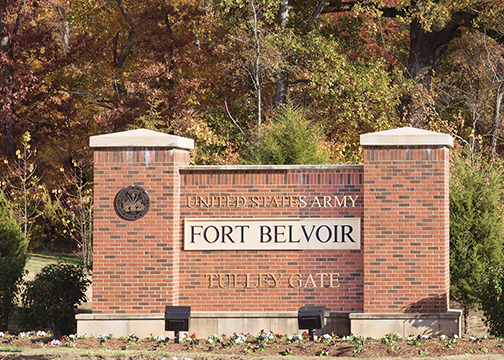
In practice, the Route 1 corridor gates, especially Lieber Gate and Pence Gate, tend to carry a large share of daily commuter traffic because they connect directly to many of the nearby residential areas. Tulley Gate off Pohick Road is also heavily used and serves as a major access point, particularly for those coming from western and southwestern routes. Kingman Gate on the north side typically operates on more limited weekday hours, and other gates may have variable or restricted availability depending on base operations.
For the most up-to-date information, it's always best to verify directly here: home.army.mil/belvoir/about/visitor-information.
The key takeaway is that commute experience near Fort Belvoir isn't just about distance on a map. It's also shaped by which part of Route 1 you're closest to, which gate is most practical for your work location on post, and how traffic flows at peak hours.
Because of this, two homes that look similar on a map or share the same ZIP code can still produce noticeably different commute experiences depending on gate access, traffic patterns, and where you're actually working on post.
Before locking in on a neighborhood, it helps to loosely think through where you'll be on post and which gate would realistically make the most sense. From there, the housing options tend to narrow quickly.
Springfield — The Default for a Reason
Drive to Belvoir: 10–20 minutes depending on gate and time of day. Tulley Gate via Route 1 and the Fairfax County Parkway intersection is the most common route. Kingman Gate from the north side is an option for those working on the northern end of post.
What it costs: Median home price approximately ~$650,000. Townhomes in the $500,000–600,000 range. Single-family homes from $650,000 to $850,000+.
Springfield is where most military families near Belvoir end up, and there's no mystery why. It has the best combination of affordability, commute, amenities, and transit access of anything on this list. Springfield Town Center gives you retail, dining, groceries, gyms, and medical offices within a few minutes. Try finding that in Lorton.
The Springfield area is large and doesn't commute uniformly. North Springfield near the Beltway interchange gets congested. West Springfield toward Burke is more suburban but adds 5–10 minutes to the Belvoir drive. The sweet spot for most military families is the corridor between Backlick Road and Rolling Road — short commute to post, short drive to Springfield Town Center, and close to the Franconia-Springfield Metro.
For dual-military or dual-federal couples where one goes to Belvoir and the other commutes to DC, Springfield is almost always the answer. Franconia-Springfield station has both Metro (Blue/Yellow lines) and VRE, which is the strongest transit combination near Belvoir.
Schools: Fairfax County Public Schools — consistently among the best in Virginia. West Springfield High School is one of the top-rated high schools in Fairfax County. Specific elementary and middle school assignments vary by address. Verify before buying.
Best for: Most military families. Dual-commute households. Families who want suburban convenience without sacrificing access to DC.
Kingstowne — Best Planned Community Near Belvoir
Drive to Belvoir: 10–15 minutes to Tulley Gate via Route 1 corridor.
What it costs: Median sale price approximately $650,000. Townhomes from $550,000 to $800,000. Single-family homes from $750,000 to $1.1 million.
Kingstowne has the highest concentration of amenities of any neighborhood near Belvoir. Its own retail center, restaurants, a movie theater, parks, trails, and a community pool system — all within a short drive of any address in the community. You're still driving everywhere like every other neighborhood on this list, but at least everything you need is within a few minutes rather than a 15-minute trip to Springfield Town Center or a trek up Route 1.
You pay a premium for that convenience. Both purchase price and HOA fees — typically $100–250/month for townhomes — run higher than Springfield or Lorton. If you're optimizing for square footage per dollar, those areas will stretch further. If you want every daily errand concentrated in one nearby area with a consistent, well-maintained community feel, Kingstowne delivers that. Before making an offer in any HOA community, read our HOA documents guide so you know what to look for in the resale packet.
Transit: Close to Franconia-Springfield Metro and VRE. Short drive or bus connection to the station.
Schools: Fairfax County Public Schools. Kingstowne feeds into well-regarded elementary and middle schools. Verify assignments by address.
Strong fit: Families who want an amenity-dense planned community and are willing to pay the premium for the convenience.
Lorton — The Value Play with Long-Term Upside
Drive to Belvoir: 5–15 minutes depending on location. Southern Lorton along Route 1 is the closest residential area to Tulley Gate. Lorton Station is 10–15 minutes from Tulley Gate via the Fairfax County Parkway and Route 1.
What it costs: Median home price approximately $550,000–600,000. Newer construction in Lorton Station runs $600,000–800,000 for townhomes and $800,000+ for single-family. Older Lorton neighborhoods along Route 1 start in the $450,000–550,000 range.
Dollar for dollar, Lorton gives you more house and more land than anywhere else within 15 minutes of Belvoir. Lorton Station specifically has become one of the most popular military family neighborhoods because it combines newer construction with a community feel and one of the shortest commutes to post.
The tradeoff is that Lorton feels farther from everything that isn't Fort Belvoir. Shopping and dining are less robust compared to Springfield. The drive to Tysons, Arlington, or DC is longer. If your life revolves around post and your family is comfortable in a quieter suburban setting, Lorton is excellent.
The rental angle is where Lorton gets interesting. If you plan to PCS in 3–5 years and hold the property as a rental, Lorton deserves serious consideration. Lower purchase prices relative to Springfield or Kingstowne mean less cash flow negative exposure as a landlord. The proximity to Belvoir ensures consistent military tenant demand — service members and DoD civilians who want a short commute to post are always looking for rentals in this corridor. VA Loan buyers often prefer Lorton for cash flow structure: a $550,000 Lorton townhome with a VA loan is significantly easier to manage as a cash-flow-near-neutral rental than a $700,000 Springfield property with the same tenant pool. For military families thinking about building a real estate portfolio one PCS at a time — see our deeper breakdown on house hacking in the DMV — Lorton is often where the math works first.
Transit: Lorton VRE station provides commuter rail to DC. No Metro. Weakest transit option on this list if your spouse commutes by rail.
Schools: Fairfax County Public Schools. South County area schools are well regarded. Verify assignments by address.
Best for: Families prioritizing value and short commute. Buyers with a buy-and-hold rental strategy after PCS.
Burke — Quiet Suburban Alternative
Drive to Belvoir: 15–25 minutes depending on route and traffic. Farther from post than Springfield or Lorton, but the commute is manageable and mostly against the flow of Beltway traffic.
What it costs: Median home price approximately $600,000–700,000. Townhomes from $450,000 to $600,000. Single-family homes from $650,000 to $900,000+ depending on lot size and condition. Comparable to Springfield pricing but with more yard and less density — see our townhome vs single-family breakdown if you're weighing the two.
There are a lot of military families in Burke, and the reason is simple — it offers the suburban lifestyle that Springfield promises but with more breathing room. Bigger yards, quieter streets, lower density, and a pace that feels noticeably less hectic than the Springfield corridor. If your priority is raising young kids in a neighborhood where they ride bikes and play outside, Burke delivers that feel better than most places near Belvoir.
The schools are strong. Burke feeds into highly regarded Fairfax County schools and the community has a reputation for being family-oriented in a way that goes beyond the standard real estate marketing language.
The tradeoff is commute time and convenience. Burke is farther from Belvoir than Springfield, Franconia, or Lorton — and it shows during morning rush. Retail and dining options are more limited, and you're more car-dependent for daily errands than you would be in Springfield or Kingstowne. Burke is the neighborhood for families who have decided that space and schools matter more than a 10-minute commute.
Transit: Burke Centre VRE station provides commuter rail access to DC. No Metro. If your spouse commutes to DC, VRE is an option but less flexible than Metro.
Schools: Fairfax County Public Schools. Strong elementary and middle school assignments. One of the primary reasons families choose Burke over closer-to-post alternatives.
Usually chosen by: Families with young children who prioritize schools, yard space, and a quieter suburban environment over commute time. Buyers who are comfortable with a 20+ minute drive to post in exchange for a neighborhood that feels more residential than anything closer to Route 1.
Franconia — Most Underrated Near Belvoir
Drive to Belvoir: 10–15 minutes to Tulley Gate via Route 1 or Beulah Street. One of the shorter commutes to Belvoir from north of post.
What it costs: Townhomes from $450,000 to $600,000. Single-family homes from $550,000 to $750,000. Some of the best value near Belvoir for families who don't need the Kingstowne amenity package.
Franconia is the option nobody talks about. It lacks the planned community polish of Kingstowne and the retail density of Springfield, but it offers lower prices and a shorter commute than both. Many of the homes are older — 1960s–1980s construction — which means more maintenance but also more lot size and interior space per dollar than you'll find in a newer development.
The Franconia-Springfield Metro station sits at the edge of the neighborhood, giving residents the best transit access on this entire list. For a dual-military or dual-federal couple where one commutes to Belvoir and the other to DC, Franconia's combination of price, commute, and transit is quietly unbeatable.
The neighborhood is quieter and less commercial than Springfield or Kingstowne. Some families love that. Others feel isolated. Know which type you are before committing.
Transit: Franconia-Springfield Metro and VRE — closest transit access on the list.
Schools: Fairfax County Public Schools. Assignments vary by address.
Best for: Budget-conscious families who want transit access and a short Belvoir commute. Dual-commute households where one person takes Metro.
Mount Vernon — Best Lifestyle and Value Combination
Drive to Belvoir: 10–20 minutes via Route 1 south.
What it costs: Varies widely. Single-family homes from $600,000 to $900,000+. Townhomes and condos available at lower price points. Mount Vernon proper tends to run less than Fort Hunt while offering a similar feel — for a broader cost picture, see our Northern Virginia cost of living guide.
Mount Vernon may be one of the best-kept secrets in Fairfax County. Compared with much of Northern Virginia, home prices remain surprisingly reasonable, and residents enjoy a lifestyle that's difficult to replicate elsewhere. This is where I live.
One of the biggest advantages is avoiding much of the stress of I-395 and I-495. Instead, many residents simply cruise the George Washington Memorial Parkway into Alexandria and DC. It's one of the most scenic commutes in the country, with views of the Potomac and access to miles of trails and parks. On a good morning, you're driving along the river instead of sitting in Beltway traffic.
I filmed the drive so you can see it for yourself — Mount Vernon to Old Town, no edits.
Old Town Alexandria is only minutes away. Historic architecture, waterfront dining, restaurants, coffee shops, and boutiques — many locals consider it one of the most beautiful and livable areas in the Washington region. It was ranked 2nd on Best Places to Live on the East Coast by Travel + Leisure magazine in 2025. For people who value lifestyle as much as commute times, Mount Vernon deserves far more attention than it gets.
The commute to Belvoir via Route 1 south is straightforward, though Route 1 traffic can be unpredictable during rush hour.
Transit: No Metro station in Mount Vernon proper. Huntington Metro is ~15 minutes by car. Car-dependent for most daily needs.
Schools: Fairfax County Public Schools. West Potomac High School. Good schools overall but verify specific elementary assignments by address.
Strong fit for: Families who prioritize lifestyle, scenic commuting, and proximity to Old Town Alexandria. Buyers who want more space and character than Springfield offers at a comparable or lower price point.
Fort Hunt — Best Schools and Prestige
Drive to Belvoir: 10–20 minutes via Route 1 south.
What it costs: Median home price approximately $800,000–900,000+. Predominantly single-family homes on larger lots. Significant step up in price from everything else on this list.
Fort Hunt is where you go if school assignment is the number one priority and budget allows. Fort Hunt Elementary is one of the most sought-after schools in Fairfax County. The neighborhood feels distinctly different from the others on this list — tree-lined streets, larger lots, an established community with deep roots and strong neighborhood identity.
This is the neighborhood for families who prioritize a specific school assignment and a traditional suburban prestige feel and are willing to pay $200,000–300,000 more than Springfield or Lorton to get it. If that describes your priorities, Fort Hunt delivers. If you're optimizing for commute time and purchase price, look south.
Transit: No Metro. No VRE. Car-dependent. Worst transit option on the list.
Schools: Fort Hunt Elementary is the draw. West Potomac High School. This is the neighborhood people move to specifically for the school assignment.
Best for: Families where school assignment is the top priority and budget supports an $800K+ purchase.
Huntington / Route 1 Corridor — Best Affordability North of Belvoir
Drive to Belvoir: 15–25 minutes via Route 1 south depending on traffic.
What it costs: Condos from $200,000 to $350,000. Townhomes from $350,000 to $500,000. Some single-family homes under $500,000. The most affordable entry point into the Belvoir commuter market — a strong fit for first-time buyers in Virginia.
The Route 1 corridor is the affordability play. Huntington, Hybla Valley, and Woodlawn offer some of the lowest rents and home prices in Fairfax County while still providing access to Fort Belvoir.
The lower prices are not an accident. These areas are more densely developed, with more apartment communities, older housing stock, and slightly higher crime rates than places like Kingstowne or West Springfield. By national standards, however, Northern Virginia remains an exceptionally safe region, and most residents live comfortably without giving crime much thought. Even the more affordable parts of the Route 1 corridor would be considered safe by the standards of most major metropolitan areas.
Huntington Metro station provides direct Metro access to DC — a significant advantage over Lorton, Fort Hunt, or Mount Vernon. For a military family where one person commutes to Belvoir and the other takes Metro to DC, the Huntington corridor offers affordable housing with real transit access.
For renters, first-time buyers, and military families trying to maximize every dollar of BAH, the Route 1 corridor deserves serious consideration. A condo at $250,000 with a VA loan produces a monthly payment that leaves substantial BAH surplus — money that can be saved, invested, or used to build toward a larger purchase at your next duty station.
Transit: Huntington Metro station (Yellow line). Significantly better transit than Lorton, Fort Hunt, or Mount Vernon.
Schools: Fairfax County Public Schools. School quality varies more in this corridor than in other areas on the list. Research specific assignments carefully.
Works well for: First-time buyers. Renters looking to save BAH. Budget-conscious families who need Metro access. Investors looking for the lowest entry point near Belvoir.
Who Should Live Where — The Quick Guide
- Typical military family PCSing to Belvoir, safe and reliable choice: Springfield.
- Amenity-dense planned community, don't mind paying for it: Kingstowne.
- Most house for your money and plan to rent it after PCS: Lorton.
- Space, great schools, quieter pace, longer commute OK: Burke.
- Short commute and Metro access on a budget that nobody talks about: Franconia.
- Lifestyle, Old Town proximity, and the Parkway commute: Mount Vernon.
- School assignment is the single most important factor and budget is flexible: Fort Hunt.
- Maximum affordability with Metro access: Huntington / Route 1 corridor.
Every military family weighs these factors differently. The right answer depends on your commute pattern, your spouse's commute, your budget, your school priorities, and whether you plan to sell or rent when you PCS. The important thing is understanding the tradeoffs before you start looking at specific properties — not after you've fallen in love with a house that doesn't fit your life.
Before making a decision, use the 2026 BAH Calculator to find your exact housing allowance, then compare it against realistic ownership costs in your target neighborhood. If you're unsure whether buying makes sense at all for your assignment length, read BAH vs Buying: Should Military Families Rent or Buy in 2026?
Frequently Asked Questions
PCSing to Fort Belvoir and trying to figure out which neighborhood fits your family? I live near Fort Belvoir and know every neighborhood on this list personally — the commute reality, the pricing, the schools, and the tradeoffs most agents won't mention.