The Truth About Buying a Condo in Northern Virginia (2026): What Most Agents Won't Tell You

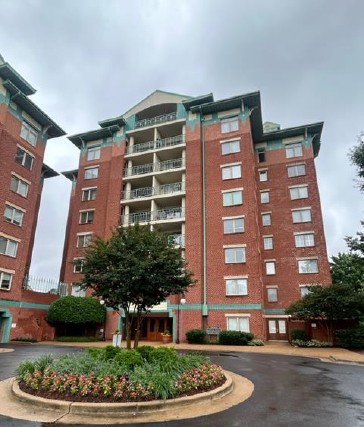
Condos in Northern Virginia can be a smart purchase, but only if your expectations match reality:
- HOA fees add $400–$700+/month in carrying costs that build zero equity
- Cash flow as a rental almost never works under 20% down — expect $500–$1,000+/month negative
- Appreciation consistently lags townhomes and single-family homes in the same area
- Rental restrictions (caps, waitlists, minimum ownership periods) can kill your exit strategy
- Buy a condo as a long-term home — not as a 2–3 year stepping stone
If you can afford to hold for 5+ years and the building is financially healthy, a Northern Virginia condo can build real wealth. If you're counting on rental cash flow or quick appreciation, it's the wrong purchase.
I recently had a conversation with a buyer who wanted to purchase a condo in Arlington with a 0% down VA loan, live in it for two to three years, then convert it to a rental when he relocated. He asked me if the numbers worked.
I told him they didn't.
He stopped returning my calls. He probably found an agent who told him what he wanted to hear. That agent will collect a commission. The buyer will find out the truth 18 months later when he's covering $500 or more per month out of pocket on a property he can't sell without taking a loss.
That conversation is why this article exists. Condos in Northern Virginia can be excellent purchases — but only if you understand the math, the restrictions, and the risks that most agents either don't know or choose not to mention.
The Cash Flow Problem Nobody Talks About
Northern Virginia is an appreciation market, not a cash flow market. That's true for all property types, but condos make the problem worse because of one thing most buyers underestimate: HOA fees.
A typical Arlington or Alexandria condo with an HOA fee of $400–$700/month adds $4,500–$8,500 per year in carrying costs that generate zero equity. That fee sits on top of your mortgage, property taxes, and insurance — and it never goes away.
Here's what the real math looks like on a $400,000 condo in Northern Virginia:
- Mortgage (VA loan, 5.75%): ~$2,335/month
- Property taxes: ~$375/month
- HOA fee: ~$500/month
- Insurance: ~$50/month
- Total monthly obligation: ~$3,300
Market rent for a comparable condo in Arlington or Alexandria: $2,000–$2,750/month.
That's $500 to $1,000+ per month in negative cash flow from day one as a rental. Every month. With no guarantee it improves — because HOA fees typically increase annually, sometimes faster than rents do. And you have no control over the HOA board.
A buyer who plans to "just rent it out" after a PCS or job change needs to understand this number before they sign, not after. (See BAH vs Buying for the broader rent-vs-own math.)
The other assumption that trips buyers up is appreciation. Condos in Northern Virginia historically do not appreciate at the same rate as single-family homes or townhomes. Pull the sales history on almost any condo in Arlington or Alexandria and compare it to a townhome in the same area — the gap is consistent and significant over time. The fundamental reason is simple: land appreciates and structures depreciate. When you buy a single-family home or townhome, you own the land underneath it — and that land is what drives long-term value growth. When you buy a condo, you own the interior of a unit in a shared structure. You don't own the land. Your ownership is a depreciating asset sitting inside a building that ages, requires increasing maintenance, and competes with every other unit in the building when it's time to sell. On top of that, condo supply is relatively easier to build than single-family inventory, HOA fees reduce buyer purchasing power which suppresses price growth, and buyers with more budget often choose a townhome over a condo. If your entire investment thesis depends on appreciation making up for years of negative cash flow, a condo is the slowest vehicle to get there.
The HOA Fee Trap
HOA fees on Northern Virginia condos are not optional costs that go toward nice amenities. They cover building insurance, structural reserves, maintenance, management, and common area upkeep. You pay them whether you live there or not, whether you rent the unit or not, and whether the building actually maintains itself properly or not.
The problem isn't just the monthly amount. It's the trajectory. HOA fees increase over time — sometimes gradually, sometimes dramatically. A building that discovers deferred maintenance, a failing roof, aging elevators, or inadequate reserves can levy a special assessment of $5,000 to $15,000+ per unit with relatively little warning.
Before buying any condo in Northern Virginia, you need to review:
- The current HOA budget and fee schedule
- The reserve study — how much is saved versus how much should be saved
- The meeting minutes from the last 12–24 months — what problems has the board discussed
- Any pending or recent special assessments
- The HOA's litigation history
- The reserve funding percentage — anything below 70% is a warning sign
Most buyers skip this entirely. Most agents let them. I don't. I review HOA documents on every condo transaction because a $15,000 special assessment six months after closing isn't a surprise — it's a failure of due diligence. For a full walkthrough of what to look for, see HOA Documents Explained.
Rental Restrictions Can Kill Your Exit Strategy
Many buyers purchase condos assuming they can rent the unit whenever they want. In Northern Virginia, that assumption can be dead wrong.
Many condo associations in Arlington, Alexandria, and Fairfax impose rental restrictions including:
- A cap on the percentage of units that can be rented at any time — if the building is at its cap, you wait on a list
- A minimum ownership period before renting is allowed — sometimes 12–24 months
- Lease term minimums — no short-term or Airbnb-style rentals
- Approval requirements for tenants — the HOA can require background checks, interviews, or board approval
- Annual rental permits with fees
A buyer who plans to live in a condo for two years and then rent it out needs to verify — before making an offer — whether the building allows it, whether the rental cap has availability, and what the approval process, if any, involves. Discovering after closing that you can't rent your unit because the building is at 30% rental capacity with a waitlist is not just a theoretical risk.
This is especially important for military or State Department buyers. If you receive PCS orders and your condo building doesn't allow rentals — or has a waitlist — your only options are selling (possibly at a loss if you haven't built enough equity because the first few years of a mortgage go almost entirely to interest) or requesting an exemption from the HOA, which is not guaranteed. Military buyers should also read the BAH vs Buying guide and the VA Loan Guide for Military Buyers before committing.
When Buying a Condo in NoVA Actually Makes Sense
Despite everything above, condos can be smart purchases. But only when the buyer's expectations match reality.
It makes sense when you're buying a home, not an investment.
If you plan to live in the condo for five or more years, the monthly payment compared to renting a similar unit is often favorable — especially with a VA loan at zero down. You build equity through principal paydown and appreciation while paying a predictable housing cost. The key is planning to hold it long enough for appreciation and principal reduction to offset the transaction costs of buying and eventually selling. See Closing Costs Explained in Virginia for what those transaction costs actually look like.
It makes sense when you value lifestyle over the spreadsheet.
A condo in Rosslyn, Clarendon, or Old Town Alexandria puts you in a walkable, Metro-accessible semi-urban environment that a townhome in Springfield or Lorton can't match. If that lifestyle is worth the premium and the cash flow tradeoff, the purchase can absolutely make sense — you just need to go in with open eyes. The Cost of Living in Northern Virginia guide gives you the broader context on what that lifestyle premium actually costs.
It makes sense when the building is financially healthy.
A well-managed building with strong reserves, stable fees, no deferred maintenance, and no pending special assessments is a fundamentally different purchase than a building with 40% reserve funding and a roof that needs replacement. The unit price might be similar. The risk profile is not.
It makes sense when you don't need it to be a rental.
The buyers who get in trouble are the ones who need the property to cash flow as a rental to make the purchase work. If you can afford to hold it regardless — or if you plan to sell when you leave — the rental restriction and cash flow problems become irrelevant.
When It Doesn't Make Sense
- You're planning to rent it out in 2–3 years and expect it to break even. It almost certainly won't in Northern Virginia at current prices and rates (unless you are putting 20%+ down). The HOA fee alone often ensures negative cash flow.
- You're buying based on the listing agent's projected rental income. Those projections rarely account for vacancy, HOA fee increases, maintenance inside the unit, management fees if you're remote, or the gap between asking rent and actual real-world lease price.
- The building has low reserves or a history of special assessments. You're buying into a building that either can't afford to maintain itself or has been deferring maintenance that will eventually come due — on your balance sheet.
- You haven't read the HOA documents. If your agent didn't pull and review the resale certificate package, budget, reserve study, and meeting minutes before you made an offer, you're making a six-figure decision with incomplete information.
What I Tell Every Condo Buyer
The conversation I have with all of my buyers is the same every time:
Can you afford to own this property for at least five years? If you leave in two or three years, can you afford to carry it at a loss until the math improves — or can you afford to sell and potentially write a check at closing?
If the answer to both is no, a condo in Northern Virginia is the wrong purchase right now. Rent instead. Buy when your timeline and financial position support a hold long enough to make the investment work.
If the answer is yes — and the building is financially healthy, the HOA documents check out, and you understand the rental restriction landscape — a condo in Northern Virginia can be a solid purchase that builds real wealth over time.
The key is going in with accurate expectations rather than optimistic assumptions. That's what I'm here to ensure.
Related reading: HOA Documents Explained, Closing Costs Explained in Virginia, Arlington vs Alexandria Housing Comparison, BAH vs Buying: Should Military Families Rent or Buy?, VA Loan Guide for Military Buyers, Cost of Living in Northern Virginia.
Frequently Asked Questions
Thinking About a Condo in Northern Virginia or Maryland?
I review every HOA document, analyze the building's financial health, and run the real cash flow numbers before you make an offer — not after. No optimistic assumptions, no commission-driven advice.