New Construction Is Quietly Capping Your Resale Value
If a builder is still selling homes near you, they — not the last resale on your street — set your real price ceiling. Here's how to price with that in view.
If you own a home in or near a community that's still being built, there's a factor shaping your resale value that you can't see from your own front door: the builder down the street.
Most sellers price their home by looking at what similar homes sold for. That's the right instinct — but in a neighborhood with active new construction, those sold comps only tell half the story. The other half is what a buyer can get brand-new, right now, for a similar price.
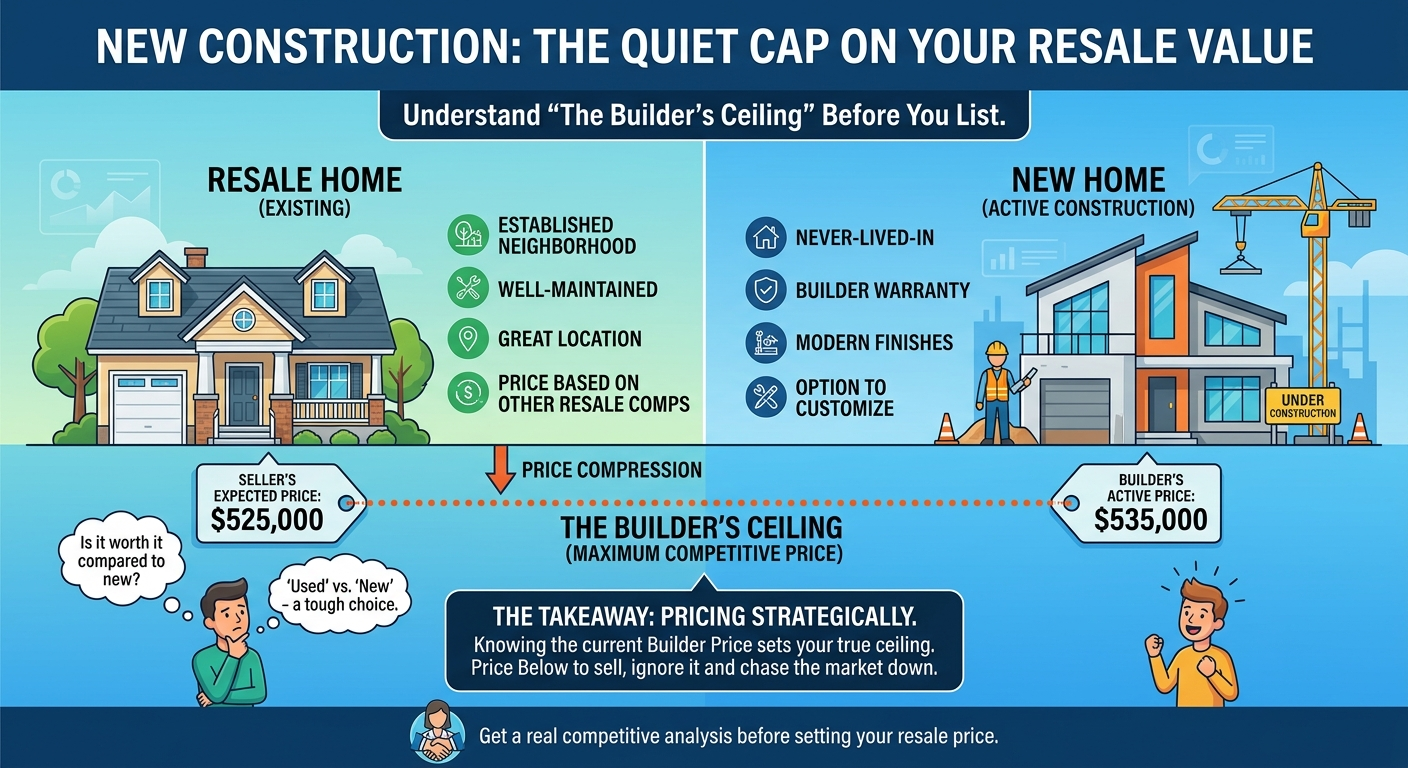
Here's the dynamic. When a builder is still selling homes nearby, a buyer weighing your resale is also weighing a never-lived-in home with a warranty, modern finishes, and the ability to pick their own options. If that new home is priced close to yours, your resale has to compete on price to make sense — because "used" rarely wins against "new" at the same number. Even brand-new detached homes a short drive away can pull buyers out of the resale townhouse market if the price gap is small enough.
This is why a home can be genuinely nice, priced against legitimate comparable sales, and still sit on the market. It's not the home. It's the ceiling the builder sets. I've watched a never-lived-in resale take months and multiple price cuts to sell, purely because it was competing against active new construction a few hundred feet away.
The takeaway for a seller isn't discouraging — it's strategic. You have to know what the builders in your area are currently selling and for how much, because that's your real ceiling, not just the last resale on your street. Price with that ceiling in view and you sell. Ignore it and you chase the market down. That's the same principle behind smart pricing strategy, and it feeds directly into what you actually keep at closing.
If you're thinking about selling near new construction, I'll show you exactly what you're competing against before you set a price.
— Jon