The Second Oven Problem
A second kitchen in the basement can stall your appraisal and complicate your financing. What it means in the DMV, where basement apartments are common.
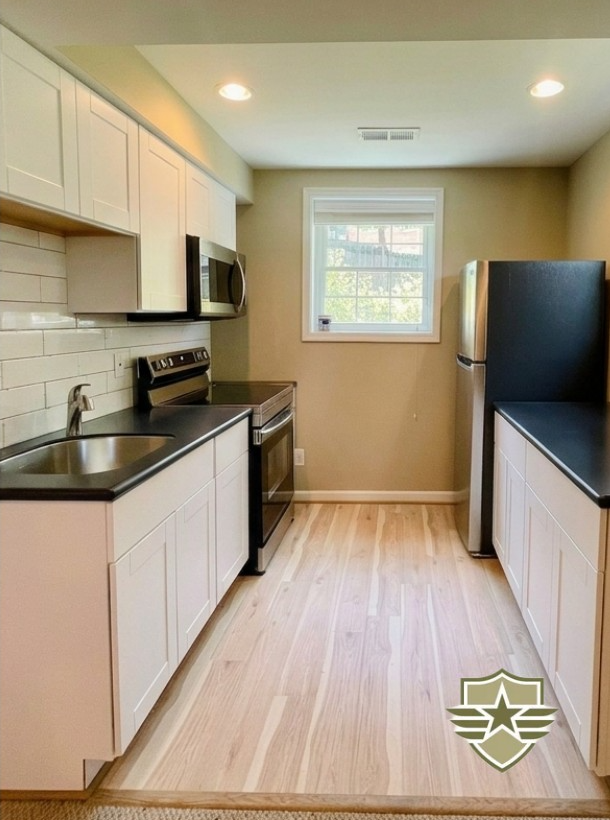
There's a range in the basement.
Maybe the previous owner put in an in-law suite. Maybe it's a rental setup that predates the current seller. Maybe somebody just wanted a second kitchen for entertaining. Whatever the reason, it's common in this region, and most buyers have no idea it can complicate their loan.
I've dealt with it before. The appraiser flagged the second kitchen, and the deal stopped moving until it was resolved. We ended up needing a new appraisal with a different lender before it closed.
Why the appraiser cares
An appraiser's job is to describe the property as it actually exists. A second kitchen, particularly one paired with a separate entrance and a full bath, doesn't read as a nice feature. It reads as a possible second dwelling unit. What makes it a second kitchen is the full oven (typically 240V electric); a stove-top doesn't count here in practice.
That triggers a zoning question. Is this an accessory dwelling unit, and if so, is it permitted?
If the county has no permit on record, you now have a property that may be improved in a way that doesn't match its legal use. Lenders do not like financing that. Some will require the range removed before closing. Some will require the seller to permit it, which is not a fast process. Some will just decline.
The buyer usually finds out about this a week into the appraisal, which is a week into a 30-day contract.
Why this hits harder in the DMV
Basement apartments are fairly common here. High housing costs plus a lot of multigenerational households plus decades of owners renting out lower levels means a substantial share of the housing stock has something in the basement that was potentially never permitted.
Accessory dwelling unit rules also vary considerably across Fairfax, Arlington, Alexandria, Stafford, Montgomery County, and Prince George's County. What's legal in one jurisdiction is a violation a few miles away, and what was allowed when the work was done may not be allowed now. So "there's a kitchen down there" is not a single question with a single answer. It depends on where the house is.
What buyers should do
Ask before you write the offer. If the listing photos show a lower level with a range, a sink, and its own entrance, ask the listing agent whether there's a permit.
Have an agent who's seen this before. The appraiser is going to note the kitchen either way. What matters is whether the person representing you knows how these conversations go with a lender, which loan products handle it and which don't, and how to sequence it so you're not discovering the problem while your clock runs. That's not something you figure out mid-contract.
Understand the remedies are not equal. Removing a range is easy. Permitting an unpermitted ADU is not, and it can involve inspections, corrections, and a timeline that has nothing to do with your settlement date.
What sellers should do
Sort it out before you list.
If your basement has a second kitchen and no permit, you will find out about it during someone else's appraisal, at which point you're negotiating from a weaker position with a buyer who is already frustrated and a clock that's already running.
Decide in advance whether you'd remove the range, pursue a permit, or price for it. All three are workable. Discovering the problem on day 22 of a contract is the version that costs you.
This can be solved
I've been on the buyer side of it and gotten deals closed after it came up.
But how you solve it depends entirely on the property, the county, the lender, and where you are in the timeline. There's no general answer, which is why the useful move is finding out early rather than hoping the appraiser doesn't notice.
They notice.
If you're looking at a house with a lower-level kitchen in Northern Virginia or Maryland, it's worth a conversation before you write.
Jon Weintraub is a U.S. Army veteran and a licensed REALTOR® in Virginia and Maryland. I'm not a lender, an appraiser, or a zoning official. Permit requirements and lender policies vary by jurisdiction and change over time. Confirm specifics for your property before you rely on any of this.