What a Real Home Valuation Looks Like (and Why a Zestimate Isn't One)
A homeowner came to me to understand their options. Instead of an algorithm's estimate, I ran the real numbers — payoff, comps, net proceeds — and we found a path most sellers don't know they have.
Most home valuations are a Zestimate and a list of comparable sales.
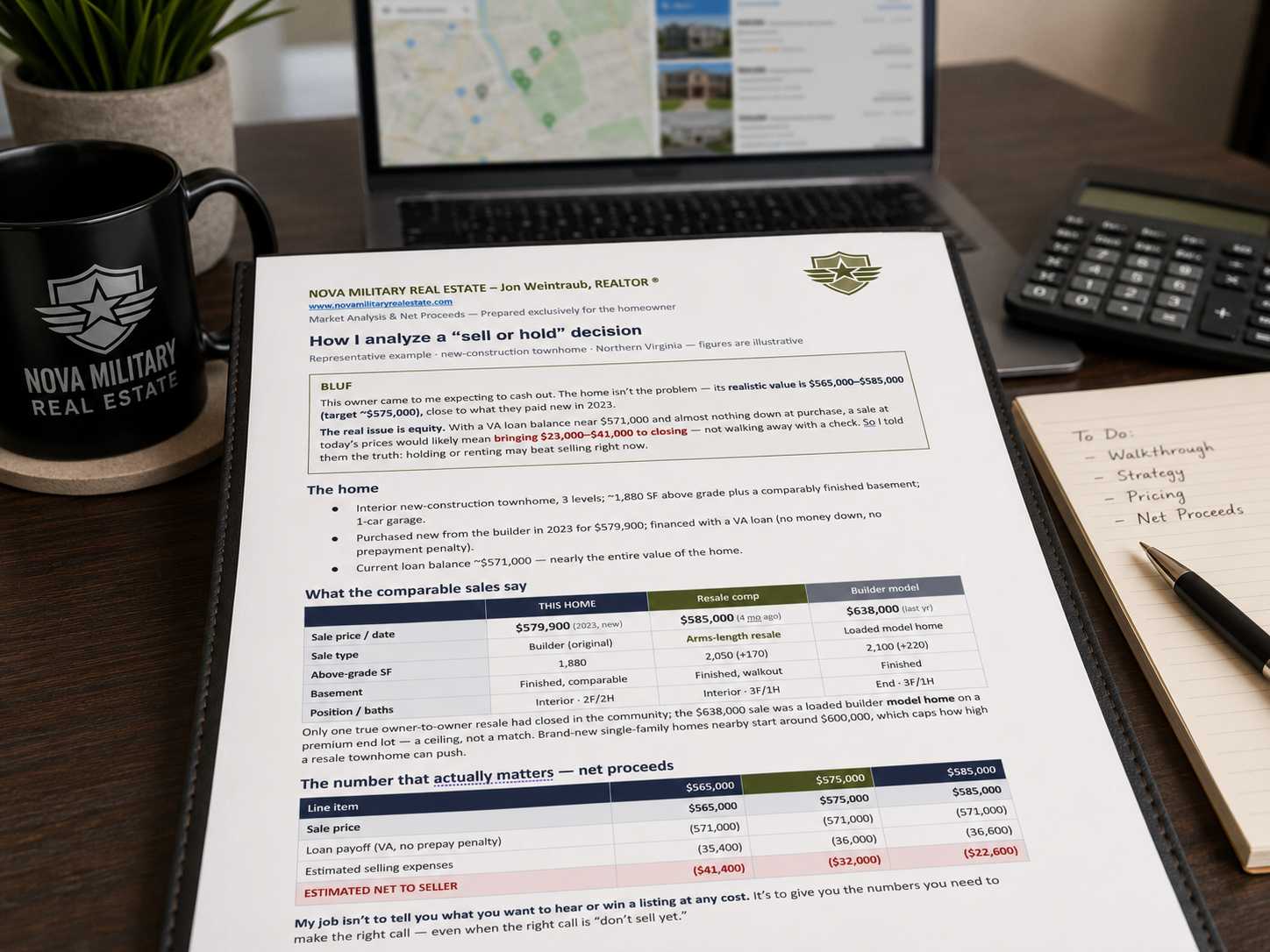
A homeowner recently came to me to understand their options. Instead of relying on an algorithm's estimate, I pulled the recorded purchase price, current mortgage payoff, comparable sales, and estimated net proceeds.
The numbers were difficult. After paying off the loan and covering normal selling costs, selling on the open market would likely mean bringing money to closing — not walking away with a check. Nearby new construction was also limiting the home's resale value.
But that's not where the conversation ended.
The home was financed with a VA loan at an interest rate that's difficult to find today. Rather than looking only at a traditional sale, we also discussed pursuing a VA loan assumption — allowing a qualified buyer to take over the existing mortgage, and its rate, in place of financing new. In the right situation, that can be a meaningful advantage, and it's an option many homeowners don't realize they have. (If you want the mechanics — who qualifies, how entitlement works, and the steps involved — I break it down in my guide to VA loan assumptions.)
My job isn't to tell people what they want to hear, or to push every client toward the same solution. It's to help them understand their options, the numbers behind each one, and make the decision that's right for them — even if that means not taking the traditional path.
— Jon